http://www.washingtonpost.com/ac2/wp-dyn?pagename=article&node=&contentId=A59720-2001Oct14
Part of that that I found interesting was not about how pirates and terrorists are similar, but how our response to non-national outlaws should be:
"Congress did not actually declare war on the pirates," Turley wrote in a memo, "but 'authorized' the use of force against the regencies after our bribes and ransoms were having no effect. This may have been due to an appreciation that a declaration of war on such petty tyrants would have elevated their status. Accordingly, they were treated as pirates and, after a disgraceful period of accommodation, we hunted them down as pirates."
Because of their outlaw conduct, pirates -- and modern-day terrorists -- put themselves outside protection of the law, according to military strategy expert Dave McIntyre, a former dean at the National War College. "On the high seas if you saw a pirate, you sank the bastard," he says. "You assault pirates, you don't arrest pirates."

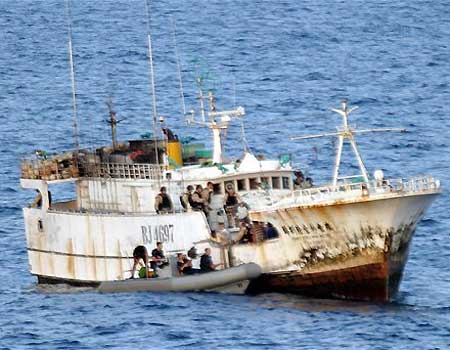

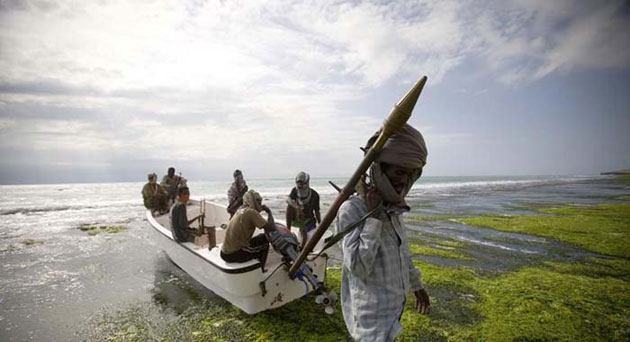
(Images sourced from: the telegraph.co.uk, denverco.myfox, examiner.com, and guardian.co.uk)
What's frightening is the fact that these pirates (or rovers) are based in a lawless land occupied by Islamist terrorists and militias, now have ambitions beyond the criminal, mainly financial, interests, and may be more open to fighting an ideological, political fight - making them other than pirates, and giving the terrorist organizations in the area skilled maritime fighters. Generally, terrorist organizations have not had much in the way of experience on the seas to make maritime a major threat. Will this change now?

No comments:
Post a Comment