Wednesday, April 29, 2009

Medical marijuana finally passes in the Minnesota State Senate


Medical marijuana bill passes Senate; House would require alcohol sales to all at Gopher games, not just in premium seats

Updated: 04/29/2009 03:30:29 PM CDT


The Minnesota Senate voted 36-28 this afternoon to approve the use of medical marijuana in the state, clearing the way for final passage of the bill and setting up a potential showdown with Gov. Tim Pawlenty over the issue.

The bill allows cancer and AIDS patients and others suffering from debilitating illnesses to grow up to 12 plants or possess up to 2.5 ounces of marijuana. It also establishes a medical marijuana licensing scheme, providing photo IDs to patients and regulating non-profit marijuana dispensaries.

Thirteen states currently have medical marijuana laws, and President Obama's administration has recently indicated it would not interfere with state medical marijuana laws.

The House has yet to take up the issue, and Pawlenty has said he would side with law enforcement groups in opposing the bill. The House was, though, talking about liquor.

The House amended a liquor bill to require the University of Minnesota to sell alcoholic beverages throughout its new football stadium, not just to premium ticketholders.

Associated Press material was used in this report.

Posted via web from Matthew Van Slyke, Getting Personal

Two weeks pass so fast...


I can't believe how fast two weeks went by. I can't even recall much of what happened in between the last time I posted and today... I wouldn't say that time flew because I was having fun. I suppose it would be more accurate to say that I had no milestones to recognize the passage of time. Sure, I had some good days where we went to see the Ming Dynasty at the Saint Louis Art Museum, had a fun day with the Bullers... that sort of thing. It's a sad state of affairs though when two weeks seems like two days because you don't have much to talk about. I'm working on that.

Posted via email from Matthew Van Slyke, Getting Personal

Wednesday, April 15, 2009

A Green Revolution Coincidence


So, I have lately had an interest in what the term "Green Revolution" means to me. I have been a little obsessed with it for the last week, and have been researching what history the term has. Generally, the Green Revolution refers to the agricultural boom in India and other places, brought forth through the adoption of American-style agribusiness techniques. This has resulted in decades of massive food growth in these countries. So, the Green Revolution was an agricultural revolution, and was in reference to the green of crop fields - India was covered in massive crops through a radical change in their agricultural methods.

To me, Green Revolution is more than agriculture, and is something I have been defining away from the old use of the term. I take it to be more than covering the planet in crops through agribusiness techniques (especially since evidence shows that these techniques could ultimately create massive groundwater depletion and eventual crop devastation). It is about all things that affect our planet's health, whether that be agriculture, energy, pollution, nuclear disarmament, etc.

The coincidence lies in the fact that I suddenly got very interested in this topic about one week ago. It was a major revelation to me, causing me to devote time and energy into knowing more about my own and others' understanding of what Green Revolution is. Then, like a cosmic gathering of consciousness, I hear a program on NPR about the Green Revolution (the one from the 1960's), which discussed all of the things I had just been learning about. It's just very eerie, how these kinds of things keep happening to me - it's like deja vu, but it feels bigger than that.

Posted via web from Matthew Van Slyke, Getting Personal

Pirates vs. Terrorists


I am taking a course on modern terrorism as part of my Masters in History program, and we have been discussing the many different forms of "illegal," or "illegitimate" violence. Not all acts are terrorism and not all publicly violent people are terrorists, with a variety of labels like "revolutionary," "freedom fighter," "extremist," "ethnic cleansing," "genocide," etc. to define these people and their actions.
 
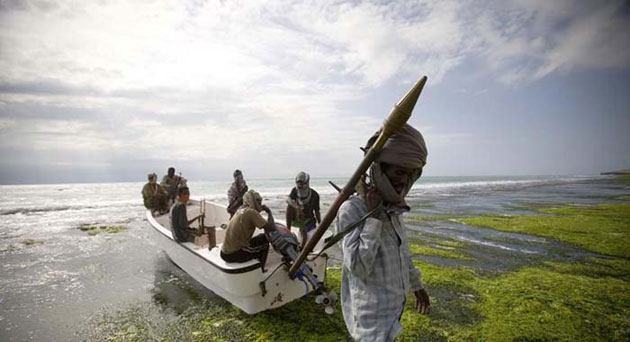
The question of piracy and its relation to terrorism has come up, with a distinction made between "pirates," who are criminal seagoers who attack specific targets for their cargo or value, "rovers," who are like pirates except that they attack whatever passerby happens along on the open sea, and "maritime terrorists," who are more like the terrorists who hijack airplanes.
 
I came across an article published right after 9/11 from the Washington Post that discussed the issues:

http://www.washingtonpost.com/ac2/wp-dyn?pagename=article&node=&contentId=A59720-2001Oct14

Part of that that I found interesting was not about how pirates and terrorists are similar, but how our response to non-national outlaws should be:

"Congress did not actually declare war on the pirates," Turley wrote in a memo, "but 'authorized' the use of force against the regencies after our bribes and ransoms were having no effect. This may have been due to an appreciation that a declaration of war on such petty tyrants would have elevated their status. Accordingly, they were treated as pirates and, after a disgraceful period of accommodation, we hunted them down as pirates."

Because of their outlaw conduct, pirates -- and modern-day terrorists -- put themselves outside protection of the law, according to military strategy expert Dave McIntyre, a former dean at the National War College. "On the high seas if you saw a pirate, you sank the bastard," he says. "You assault pirates, you don't arrest pirates."

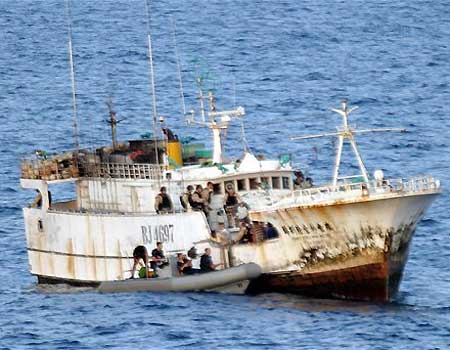
(Images sourced from: the telegraph.co.uk, denverco.myfox, examiner.com, and guardian.co.uk)

What's frightening is the fact that these pirates (or rovers) are based in a lawless land occupied by Islamist terrorists and militias, now have ambitions beyond the criminal, mainly financial, interests, and may be more open to fighting an ideological, political fight - making them other than pirates, and giving the terrorist organizations in the area skilled maritime fighters. Generally, terrorist organizations have not had much in the way of experience on the seas to make maritime a major threat. Will this change now?

Posted via email from Matthew Van Slyke, Getting Personal

Saturday, April 11, 2009

Building a Network


I am currently working on two projects that will be learning experiences for me - setting up networks and building websites that feed into each other. The networks are built, now it's a matter of refining the materials and building the basic site.

Posted via web from Matthew Van Slyke, Getting Personal

Wednesday, April 8, 2009

Staring into the face of Cyberspace


Social interactions have started to become almost entirely online for me. Living in a society that glorifies mobility and change, it's amazing to find stability in the last place I ever thought to look: the Internet. I am by no means a cyber-nerd, though I love technology and spend a good deal online.
 
Having moved around a lot in my life, the cozy little corners I have found, where I can keep my friends close enough that I don't lose then with a move, have mostly been online. Myspace, World of Warcraft (though, I've detatched from that void) Facebook, Blogger... and now Twitter and Posterous are being added to my online social repertoire.
 
I haven't taken the time to make these spaces comfortable yet, but they have become indespensible in maintaining the basic need to feel connected in a disconnected life. So, we'll see where we go from here.

Posted via email from Matthew Van Slyke, Getting Personal